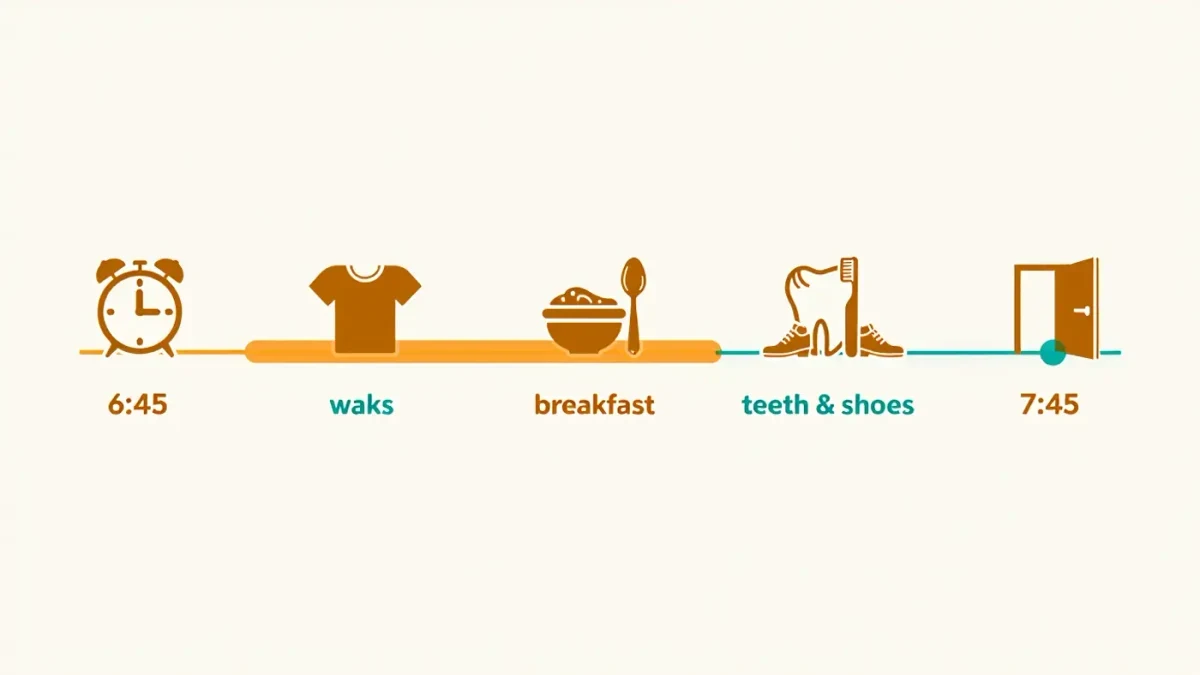

Good morning routine ideas share one trait: they fit the morning that actually exists. The strongest options are small, repeatable, and free. Daylight in the first hour, a glass of water, a ten-minute walk, two minutes of slow breathing — none of them needs gear, a gym, or a quiet house. Grouped by goal, these habits give any weekday a steadier start, and each one carries a reason rooted in sleep science.
The mechanism is the body clock. Humans run on a roughly 24-hour circadian rhythm, and light resets that clock every single day. Morning light signals wakefulness and ends the overnight rise of melatonin, the hormone that promotes sleep. A steady wake time keeps the whole cycle aligned, which is why sleep experts keep returning to two anchors: light and timing. The ideas below all ride on that foundation.
Morning Routine Ideas for Steady Energy
Energy ideas start the night before. The CDC advises seven or more hours of sleep for adults, so a fixed bedtime matters as much as any morning trick. In the morning itself, daylight comes first. Opening the curtains or stepping outside for a few minutes hands the body clock its strongest signal. A glass of water and a real breakfast follow, since a healthy diet belongs on the CDC list of sleep-supporting habits too. Skipping the snooze button rounds out the set, because a steady wake time works best when it holds all week.
Morning Routine Ideas for a Calmer Start
Calm ideas work in tiny doses. Two minutes of slow breathing, a quiet coffee without the phone, or a brief guided meditation all fit before a workday. Research summarized by NCCIH suggests mindfulness meditation helps with anxiety and stress, roughly as well as established approaches in some studies. The practice is low-risk for most people, though it never replaces standard care when stress becomes clinical. The key is keeping the dose small enough to survive a busy morning, because a calm habit that gets skipped is not calming at all.
Ideas for Movement, Even Ten Minutes
Movement ideas do not require a gym or a plan. A ten-minute walk counts, and so does a short stretch while the coffee brews. The Sleep Foundation lists regular exercise among its core sleep-hygiene habits, so a morning walk quietly supports the next night of sleep. Parking farther from the door or stepping off the bus one stop early adds steps without a schedule change. On rushed days, movement can shrink to a lap around the block and still count.
Ideas for a Focused Start
Focus ideas protect the first working hour. Writing down the day's top task before opening any feed keeps attention pointed at one thing. Laying out clothes or packing a bag the night before removes small decisions from the morning. Some people park the phone in another room until the first task is done; a paper list on the counter works just as well. The common thread is deciding once, in advance, instead of negotiating with the morning.
How to Pick Morning Routine Ideas That Last
The right ideas are the ones that fit the actual schedule. A parent leaving at 7:20 needs different habits than a remote worker starting at 9:00. One reliable approach is to attach a single new idea to an existing anchor, like coffee or brushing teeth, and run it for a week before adding anything else. Sleep experts make the same point about wind-down rituals: a repeated, familiar routine gets easier to keep over time. Starting with one idea also keeps failure cheap.
Conclusion: One Idea, Kept Daily
The best morning routine ideas are not impressive; they are repeatable. Daylight, water, movement, a minute of calm, one written task — any single one improves a weekday. A small, sourced next step: tomorrow, open the curtains within the first hour and step outside for five minutes, because morning light is the body clock's strongest signal and it costs nothing. If mornings stay exhausting despite enough sleep, that is a fair question for a clinician, since persistent sleep problems deserve a proper check.