A skincare routine for combination skin has one job: treat the oily T-zone without punishing the drier cheeks. Dermatologists suggest a gentle, noncomedogenic cleanser about twice a day, warm rather than hot water, and moisturizer everywhere, in a lighter weight on oily areas. Zoned care, not a shelf full of separate products, keeps the balance. One routine can serve both halves, and balance, not war on oil, is the aim.
This guide explains how to read combination skin, builds a single routine that serves both zones, and shows where zoned treatment earns its keep. Zoned care is the recurring theme. The advice sticks to dermatology guidance and clinic-published care notes, and three sources sit behind it. For related coverage, see The Best Skincare Routine for Acne: Dermatology Guidance, Not Marketing.
Reading combination skin
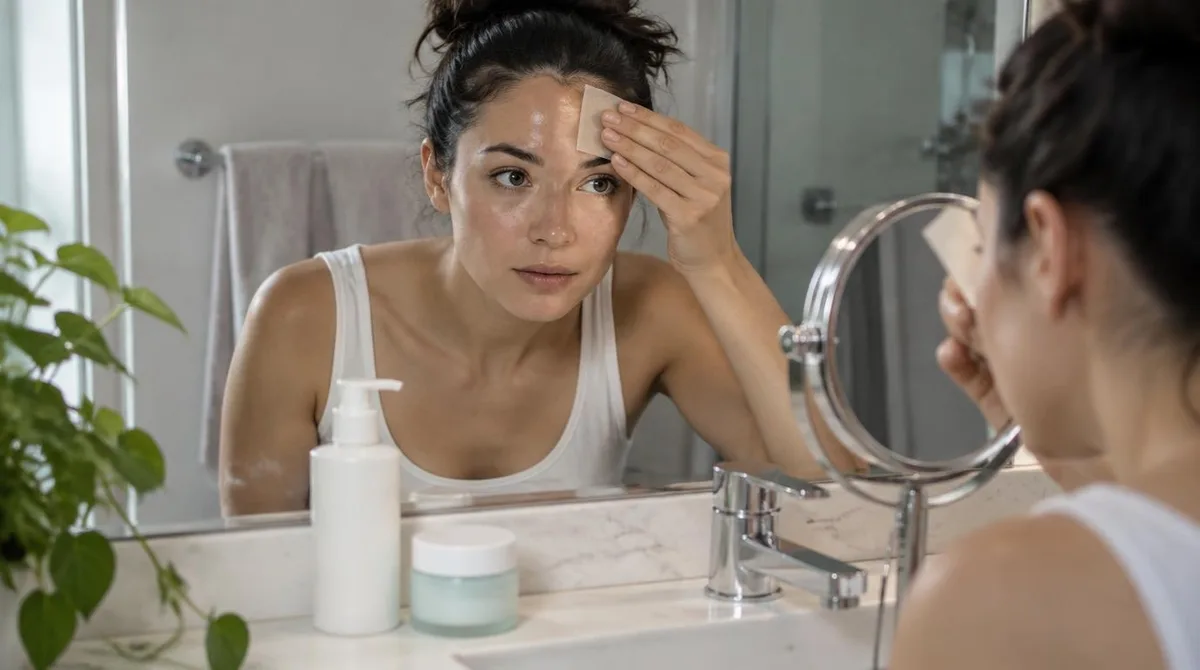
Combination skin means an oily forehead, nose, and chin sitting beside normal or dry cheeks. The T-zone packs more sebaceous glands, so it shines by midday while the cheeks feel tight after washing. Blotting paper at noon shows the line clearly. Seasons move the map, with winter drying the cheeks further and summer oiling the zone, so review the pattern twice a year.
The pattern is common and manageable. It rarely needs two full routines; it needs one smart routine plus a few zoned moves, which is good news for both budgets and bathroom counters. Split routines waste money and patience.
A skincare routine for combination skin that respects both zones
Morning: wash the whole face with a gentle foaming cleanser and warm water, keeping to about twice daily. Pat the face dry with a soft towel. Apply a light, oil-free, noncomedogenic moisturizer across the entire face, laying a little more on the cheeks than on the T-zone. Sunscreen finishes the routine: broad-spectrum, oil-free, and fragrance-free, applied every single morning. This connects to our earlier piece, The Nighttime Skincare Routine: Why Order Matters More Than Products.
Night: cleanse again if the day calls for it. On the T-zone only, a treatment such as salicylic acid can follow, ideally with a provider's guidance. Cheeks get plain moisturizer, sometimes a richer cream in winter, and the T-zone rarely needs extra cream. Blotting papers handle midday shine without disturbing the rest of the face, and less product on the zone is the rule.
Zoning: treating the T-zone without punishing the cheeks
Zoning simply means placing actives where they are needed. Salicylic acid, for instance, belongs on the forehead, nose, and chin rather than the cheeks. Stronger tools like retinol can suit combination skin with a clinician's input. Multi-masking follows the same logic, with a clay-style mask on the T-zone and a hydrating one on the cheeks in the same sitting. One mask per zone, one sitting, and cheeks stay in the calm lane.
Over-scrubbing the oily zone backfires. Friction and harsh products worsen clogged pores instead of clearing them, so gentleness wins even where shine annoys most. Gentle pressure cleans better than force, and shine control is not worth red skin.
Choosing products for two skin types at once
Labels do the heavy lifting. Noncomedogenic and oil-free wording protects the zone, while fragrance-free formulas and cream textures protect the cheeks. One gentle cleanser serves the whole face, and one cleanser, two moisturizers, one sunscreen is the full list. A patch test of any new product costs nothing and prevents surprises.
Shopping this way beats buying full separate lines. Fewer products also mean fewer chances for irritation and a simpler habit to keep. Simpler shelves are easier to maintain, and two needs fit inside one plan.
Conclusion: one routine, two needs
A skincare routine for combination skin succeeds by keeping the base gentle for all of the face and saving strength for the zone that needs it. Cleanse twice daily, moisturize everywhere with the weight varied, protect with sunscreen, and place the actives carefully. Treat the zone, feed the cheeks, and protect it all. If clogged pores or breakouts keep winning, a dermatologist can set the treatment layer on top of that base.