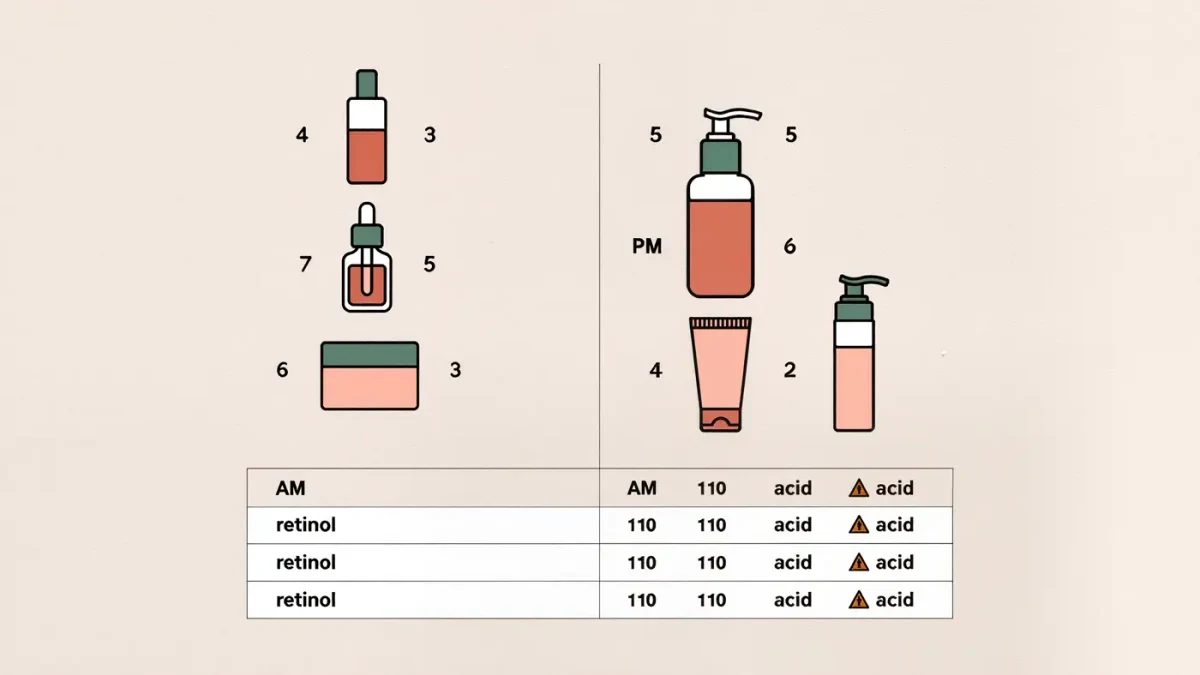

Retinol belongs at night. It goes after cleansing and before moisturizer. That is the short answer to when to use retinol in skincare routine order. Cleanse gently. Pat dry. Apply a thin layer of retinol. Seal it with a noncomedogenic moisturizer. Dermatology guidance places this ingredient only in evening routines. Daylight breaks it down. It also raises sun sensitivity. Morning routines then handle protection. Gentle cleansing, moisturizer, and SPF 30 sunscreen do that job. The evening order stays the same every night. That is the frame.
This guide covers the placement. It covers the starting frequency. It covers the pairings that make retinol tolerable. It also covers the signals that call for slowing down. The details come from clinical and dermatology sources. Each section ends with a plain rule. Prescription questions belong with a dermatologist. The rules are short.
When to use retinol in skincare routine order
Order matters with this ingredient. At bedtime, wash hands first. Then cleanse with a gentle, non-abrasive cleanser. Pat the face dry. No scrubbing at this stage. Apply a thin layer across the whole face. Use a dose about the size of a pea. One pea-sized dab covers the entire face. Finish with a layer of noncomedogenic moisturizer on top. That seal locks the step in. It also buffers irritation. We covered a connected angle in The Nighttime Skincare Routine: Why Order Matters More Than Products.
Evening placement exists for two reasons. Vitamin A derivatives work without daylight interference at night. The range runs from over-the-counter retinol to prescription tretinoin. Daytime sun is also harder on skin that is adjusting. Nights give the surface a calm window to adapt. Night skin takes the step without makeup in the way. Consistency beats hero doses. Nights are for repair. For related coverage, see The Morning Skin Care Routine, Step by Step: Order and Reasons.
How often to start
Every other night is the standard opening move. Dermatologists suggest beginning with the gentlest formula available. As tolerance grows, more nights can follow. Some people stay at two or three nights per week long-term. That still counts as a working routine. A calendar note can hold the schedule. More is not better here. Slow is fast.
Results are slow by nature. Cell turnover speeds up first. Skin can look slightly worse for a few weeks before it looks better. Texture and tone changes take weeks to months. Switching products every few days only restarts the clock. Photos every two weeks make progress plain. Patience pays in this step. Time is the other tool.
What pairs well with retinol
Moisturizer is the main partner. Apply it after each retinol step. That helps many people stay comfortable. A plain, thick cream works as well as a pricey one. Broad-spectrum SPF 30 or higher belongs in every morning. Retinoids make skin more sensitive to sunlight. Protective clothing and limited sun time help as well. Hats and shade count too. Sunscreen is not optional.
Harsh pairings cause the trouble. Alcohol-based toners, abrasive scrubs, and strong exfoliants stack irritation on irritation. Anyone with rosacea or skin allergies should pause here. The same goes for active dryness or pregnancy plans. A board-certified dermatologist can clear the plan first. One change at a time keeps the cause of any reaction clear. When in doubt, ask first.
Signals to slow down
Mild warmth or light flaking can be normal in the early weeks. Burning is not. Lasting redness is not. Sheets of peeling skin and deep discomfort are not. The response is to pause for a few nights. Rebuild moisture. Restart at a lower frequency. Water and a plain cream come first. Burning is never a price worth paying. Skin needs days off sometimes.
Irritation that keeps returning deserves a check. A dermatologist can test whether a different strength fits better. A different retinoid may suit as well. Some skin simply needs the prescription conversation. That visit often saves months of trial and error. A short break helps a lot.
Conclusion: placement, patience, protection
Night placement forms the first rule. An every-other-night start forms the second. Moisturizer and morning sunscreen complete the frame. Give the routine several weeks before judging it. Treat persistent irritation as information. It is not a challenge to push through. Keep the order written where it is seen. Read the Cleveland Clinic retinol guide once before the first application. The evening slot stays fixed. Everything else flexes around it. Keep it simple and steady.