A morning stretch routine can turn the creakiest part of the day into something gentler. NHS guidance says a set of easy stretches takes about five minutes, with each hold lasting 15 to 20 seconds. Morning stiffness after sleep is common and usually eases with slow, easy movement rather than long sessions on a mat.
The plan below follows that advice closely. It explains what overnight stiffness is, walks through five moves in plain words, and ends with the safety signals that matter. No equipment is needed beyond a wall and a chair.
What Overnight Stiffness Means
Sleep is stillness. For hours the body barely shifts position, joints rest at the same angles, and soft tissues get little movement. Morning stiffness is the normal protest of tissues waking up after that long pause. It usually fades within the first half hour of moving around.
Gentle, repeated movement is the answer most physiotherapy advice lands on. NHS flexibility guidance favors easy, controlled moves done at least twice a week and built up slowly. Stretching to mild tension, never pain, helps joints find their range again without forcing anything.
The Morning Stretch Routine: Five Moves, Five Minutes
Static holds below last about 15 to 20 seconds each, following NHS advice, once per side. Moving slowly matters more than reaching far.
Neck side tilt. Sit tall on the edge of the bed. Tip one ear toward the same-side shoulder until a light pull appears along the neck. Hold, breathe, and switch sides.
Standing side bend. Stand with feet hip-width apart. Slide one hand down the outside of the thigh until a stretch shows up along the opposite side of the waist. Hold, then switch sides.
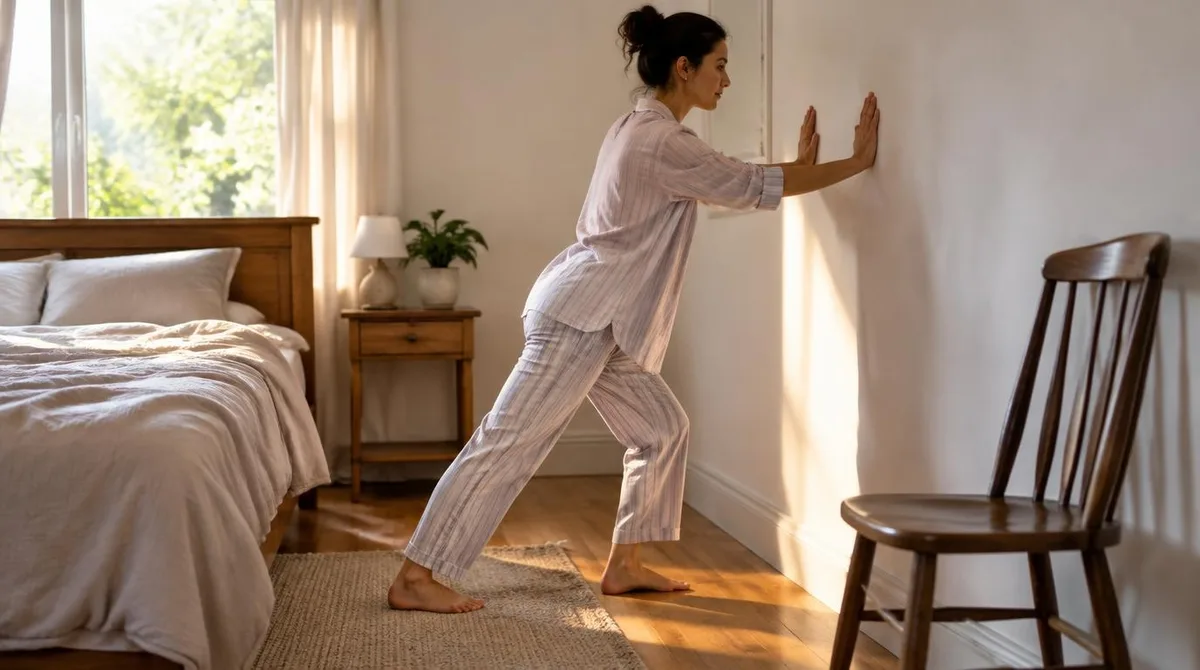
Calf stretch at the wall. Hands on the wall, step one foot back, keep that heel down and the leg straight. Lean in gently until the calf wakes up. Switch legs.
Seated figure-four. Sit on a chair, cross one ankle over the opposite knee, and let the raised knee drop slowly. A mild stretch in the hip is the target. Switch sides.
Cat-cow on hands and knees. Round the back up while breathing out, then arch gently while breathing in. Ten slow cycles finish the routine.
Order and Timing: How the Minutes Stack Up
Work from the top of the body downward: neck, waist, calves, hips, then spine. A fixed order removes decisions at seven in the morning, and fewer decisions mean better odds that the routine happens at all. Readers following this should also see A Morning Workout Routine That Beats the Snooze Button.
Twice a week is the NHS minimum for flexibility work; daily feels even better when the body enjoys it. A morning stretch routine slots neatly after brushing teeth, while the kettle boils, or before the first coffee. The whole set fits inside one song on the radio.
Travel weeks need a backup plan. The neck tilt and side bend work in any hotel chair, and the calf stretch needs only a wall. No gear, no excuses, no missed week.
Safety Signals: Pain, Numbness, and When to Call
Stretches should feel like mild tension, never pain. NHS advice is direct: check with a physiotherapist or other health professional before stretching with an injury, a medical condition, or during pregnancy, since some moves need changes.
Certain signs deserve a clinician rather than a stretch: numbness or tingling down a limb, pain that sharpens with movement, or stiffness that lasts most of the day despite easy movement. Those are questions for a professional, not targets to stretch through.
Conclusion: Gentle Repetition Beats Heroic Sessions
A morning stretch routine works because it is small. Five moves, short holds, a wall, and a chair. Done a few times a week, it answers overnight stiffness the way physiotherapy advice recommends: slowly, gently, and often.
One small next step: run the five-move set tomorrow morning and notice how the body feels by coffee time. The NHS stretching guide, linked below, shows the holds and safety notes in full.