A morning yoga routine does not demand flexibility, chanting, or a spare hour. Federal researchers at NCCIH describe yoga as generally safe physical activity for healthy people, and reviews have linked regular practice with less perceived stress. A beginner sequence can fit in ten minutes with a wall and a chair.
This guide teaches the calm first: what slow movement and breath do to a stressed system. Then it walks, pose by pose, through a short sequence built for stiff beginners. It closes with pacing and safety notes, so the practice grows without breaking.
The Mechanism: Breath, Movement, and Settled Attention
Yoga pairs slow movement with steady breathing, and that pairing is the engine. Attention settles on breath and body, which gives a busy mind one job instead of ten. A 2020 review of 12 studies found benefits for perceived stress in every one of them, NCCIH reports.
The body side matters too. Poses load muscles gently, build balance over weeks, and move joints through comfortable ranges. NCCIH notes research linking yoga with better sleep and balance, and the American College of Physicians lists it among first options for chronic low-back pain.
A Morning Yoga Routine, Pose by Pose
Six poses, ten minutes, no floor flexibility required. A wall and a chair stand in for a studio.
Easy seat. Sit tall on the bed edge or a chair. Five slow breaths, in through the nose, out a touch longer than in.
Cat-cow. On hands and knees, round the spine while breathing out, arch it while breathing in. Eight cycles wake up the back.
Wall downward dog. Hands on the wall at chest height, feet a step back, hips pushed away until the back lengthens. Hold five breaths.
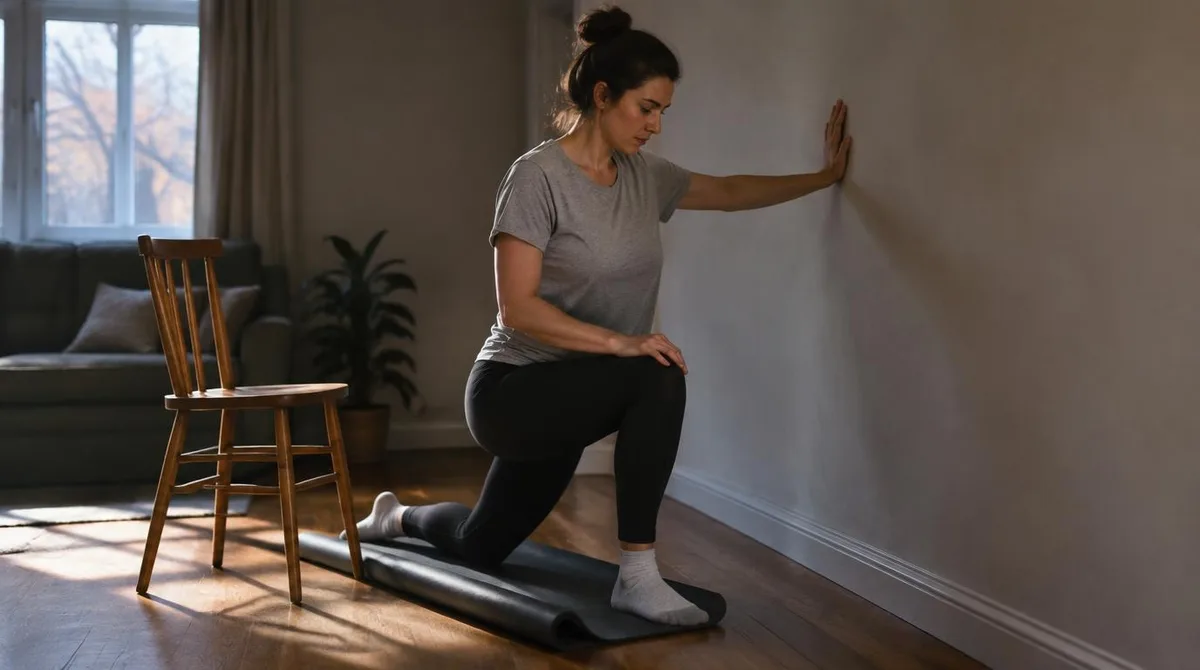
Low lunge with support. One foot steps forward between the hands, the back knee rests down or lifts, and hands steady on a chair seat. Five breaths, then switch sides.
Standing fold over the chair. Hinge at the hips and rest the forearms on the chair back. Knees can bend; the goal is a long, quiet back.
Legs up the wall. Sit sideways against the wall, swing the legs up, and rest. Two minutes of stillness closes the sequence.
Pacing the First Weeks: Props and Short Sessions
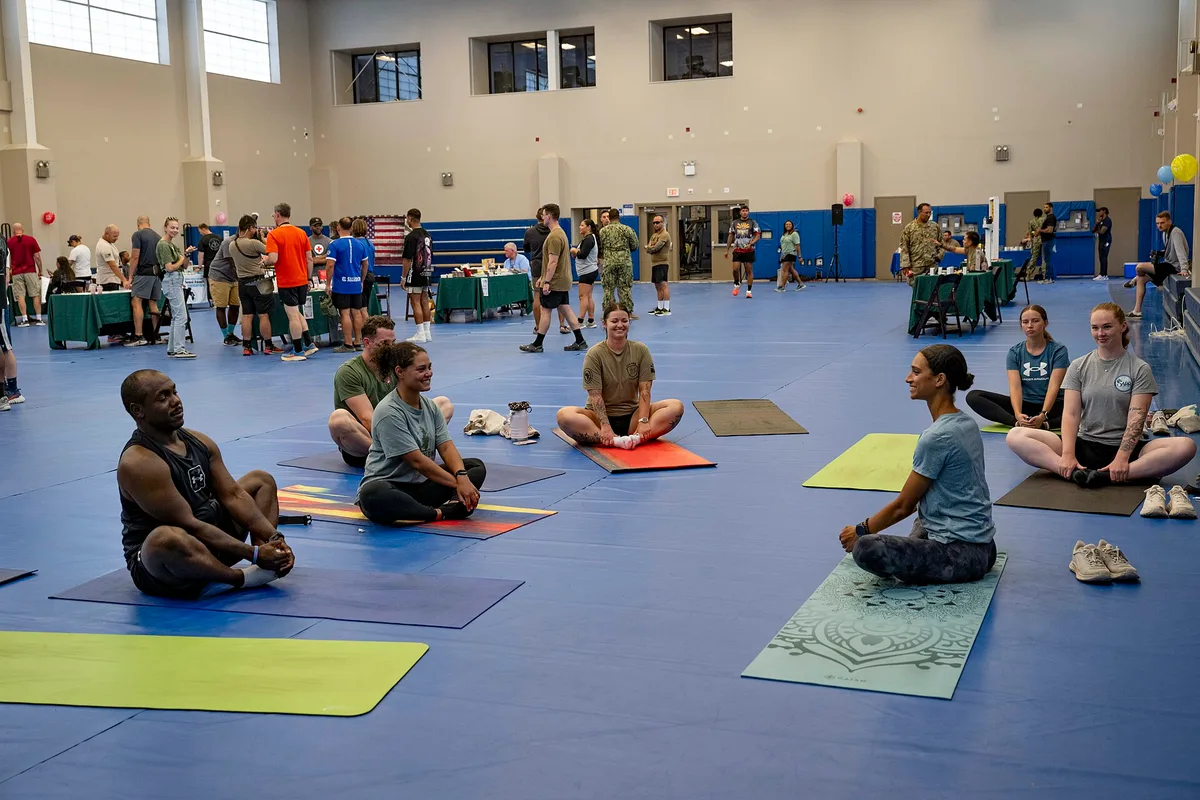
Beginners do best with short, frequent sessions rather than rare long ones. Ten minutes on five mornings beats sixty minutes once. CDC activity advice counts movement in bouts of any length, so even this small sequence adds up across a week. Readers following this should also see A Morning Stretch Routine for Stiff Mornings: Five Moves.
Props are upgrades, not cheats. A cushion under the hips in easy seat, a blanket under the knee in lunge, a thick book under the hand. NCCIH advises practicing with a qualified instructor, so a beginner class or video series can anchor practice at home. A morning yoga routine stays safest when it stays modest. This connects to our earlier piece, A Morning Workout Routine That Beats the Snooze Button.
Sequence order stays fixed on purpose. The body learns a rhythm it can predict, and predictability is part of the calming effect. Shuffle the poses later, once the habit has roots.
Safety First: Signals That Mean Pause and Ask
NCCIH names the groups who should take extra care: adults over 65, pregnant people, and anyone with knee or hip injuries, spine problems, severe high blood pressure, balance trouble, or glaucoma. Beginners should skip headstands, shoulderstands, and forceful breathing entirely.
Dizziness, sharp pain, or numbness means stop and reassess that day. Anyone with a diagnosed condition has a useful question for a clinician: is this gentle style appropriate, and which poses need modifying?
Conclusion: A Small Practice That Grows Slowly
A morning yoga routine earns trust by staying boring: same wall, same six poses, same ten minutes. Stress benefits appear across research reviews, and the safety record for gentle practice is strong. Growth means one more breath or one new pose, never a doubled session.
One small next step: run the six-pose sequence tomorrow morning and watch how the day starts afterward. The NCCIH yoga fact sheet, linked below, covers the evidence and safety notes in more detail.