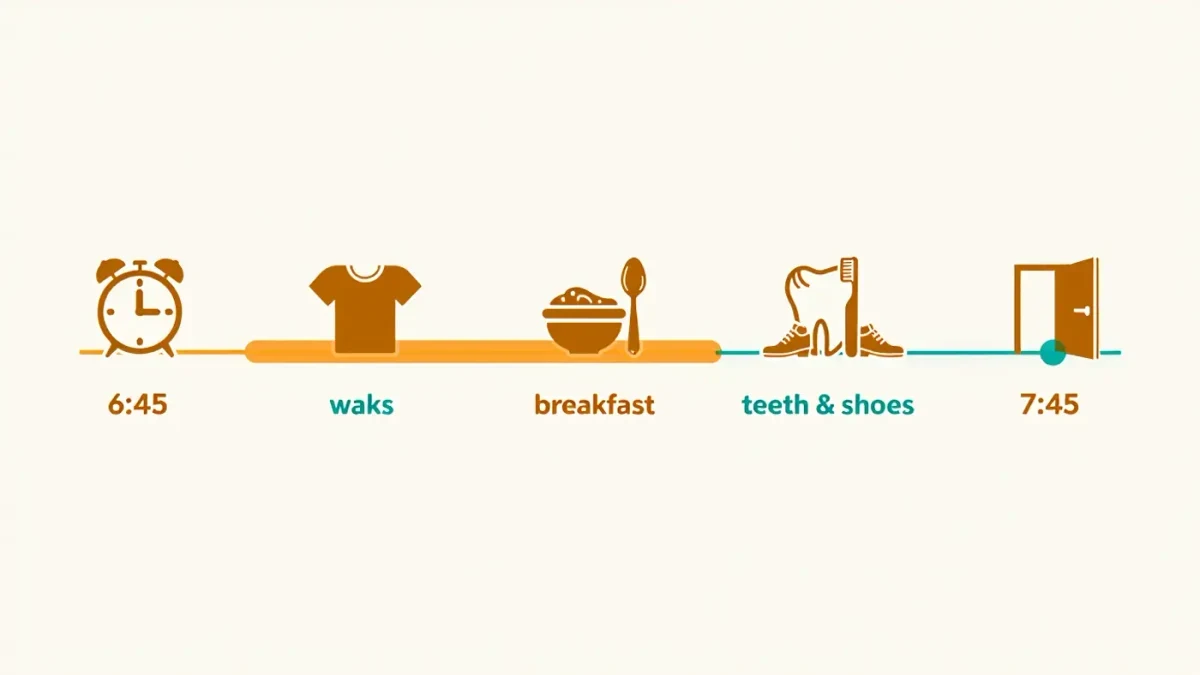

A morning routine checklist works when it has two versions, not one. The core version covers an ordinary day. The short version covers mornings after a bad night. Writing both in advance removes the daily debate about what counts and what can slide. The checklist then becomes a floor to stand on, not a test to fail, and that single design choice is what keeps it alive.
The mechanism underneath is the circadian rhythm, the body's 24-hour clock. Light resets that clock each day, and a steady wake time keeps it aligned week after week. The CDC also reminds adults that seven or more hours is the sleep target, and that sleep quality matters as much as the raw number. A checklist supports all of this by making the first hour predictable, which is exactly what an unstable schedule lacks.
The Core Morning Routine Checklist
The core morning routine checklist fits on five lines. Line one: wake at the same time as every other day. Line two: daylight within the first hour, curtains open or a short step outside. Line three: water before the first coffee. Line four: some movement, even a ten-minute walk. Line five: one real meal. Sleep experts back the fixed wake time and the light, and health agencies put regular exercise and a healthy diet on the same list, so every line has a reason behind it. We covered a connected angle in The Morning Skin Care Routine, Step by Step: Order and Reasons.
The Bad-Night Version: Three Lines Only
After a rough night, the checklist shrinks instead of disappearing. Line one still holds: wake as close to the usual time as possible, because long lie-ins confuse the body clock and push the whole schedule late. Line two: get daylight anyway, since morning light remains the strongest timing signal the body receives. Line three: one anchor task, the single thing that must happen today. Everything else is forgiven by design. A three-line morning keeps the habit alive until the next full night of sleep.
Why a Checklist Beats Motivation
Motivation runs highest on fresh mornings and disappears on hard ones, which makes it a poor plan. A checklist moves the deciding to the evening before, when the two versions get written or reviewed. In the morning there is nothing left to negotiate, only items to tick. The plan carries the decisions so the person does not have to, and the morning starts in second gear instead of neutral.
How to Track It Without Guilt
Tracking helps when it measures patterns, not perfection. A paper calendar with a mark for each completed core morning is enough, and a notes app works just as well. Missing one day is noise; missing most days for two weeks is a signal to simplify the list. The goal is a high hit rate across a month, not an unbroken streak, because an unbroken streak breaks at the first bad night and takes morale with it. Readers following this should also see Morning Routine Ideas That Survive Real Weekdays, Sorted by Goal.
When Hard Mornings Keep Happening
Some mornings are hard because the night before was short, and some are hard because sleep itself is disordered. The CDC advises talking with a healthcare provider when sleep problems persist, since conditions like insomnia and sleep apnea need proper diagnosis and care. Persistent trouble falling asleep, staying asleep, or waking unrefreshed despite enough hours in bed belongs in that conversation. No checklist replaces it, and a good one flags the pattern worth reporting.
Conclusion: A Checklist That Survives Real Life
A morning routine checklist holds because it plans for failure, not just success. Five lines on a good day, three lines on a rough one, and the same wake time through it all. One small next step: tonight, write the two versions on paper by the alarm and set the wake time for tomorrow. Morning light and a steady wake time carry more of the day than anything else on the list, and both are free.