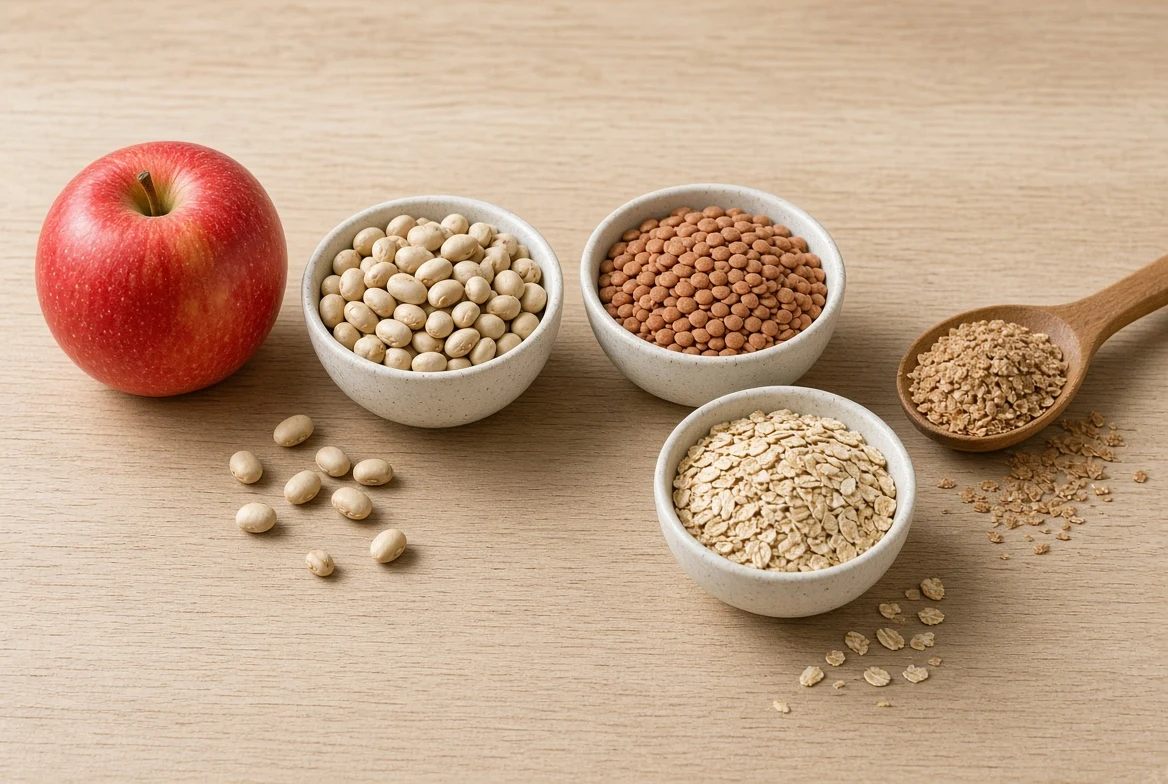

Soluble fiber dissolves in water. Insoluble fiber does not. That single difference explains almost everything about how the two behave in your gut. Soluble fiber turns into a soft gel as it moves through you. Insoluble fiber stays bulky and firm, sweeping through your digestive tract like a broom.
Which one matters more? Neither. Your body wants both, and most plant foods supply some of each. The useful question is not "which fiber wins" but "what does each one do, and which foods get me there."
The word itself gives the game away. As Cambridge Dictionary explains, soluble describes a substance capable of being dissolved in a liquid, usually water. Sugar in hot tea is the everyday example. Insoluble is simply the opposite: it will not dissolve, no matter how long you soak it.
What Does Soluble Fiber Actually Do?
Soluble fiber is the one that changes form. When it meets the water in your digestive tract, it thickens into a gel. That gel slows things down. Food leaves your stomach more gradually, which is why a bowl of oats tends to hold you longer than a slice of toast made from refined flour.
The gel also feeds something most people never think about: your gut bacteria. Certain soluble fibers ferment in the large intestine, and the bacteria that digest them are the same ones associated with a well-running gut. This is why soluble fiber is often called the "feeding" fiber.
There is a third job worth knowing. Because soluble fiber slows the passage of food, the sugars in that food enter your bloodstream more evenly. That is the plain-language version of why dietitians keep pointing people toward oats, beans and lentils when they want steadier energy through the morning.
Where do you find it? Think of foods that go soft or thick when cooked in water:
- Oats and oat bran
- Beans, lentils and chickpeas
- Apples, citrus fruit and pears
- Barley
- Psyllium husk, the powdered supplement many people stir into water
What Does Insoluble Fiber Actually Do?
Insoluble fiber is the structural fiber. It is the tough stuff in plant cell walls, and it barely changes as it travels through you. It absorbs water, adds bulk, and keeps everything moving at a steady pace.
If soluble fiber is the brake, insoluble fiber is the accelerator. People who struggle with irregularity are usually short on this type, because bulk and movement are exactly what their digestive tract is missing. It is also the reason a salad can feel so much more substantial than its calorie count suggests.
Foods rich in insoluble fiber tend to be the ones with visible texture:
- Whole wheat bread, bran and brown rice
- Vegetable skins, especially potatoes and carrots with the skin on
- Nuts and seeds
- Celery, cabbage and other crunchy vegetables
One practical note: much of the insoluble fiber in a vegetable sits in or just under the skin. Peeling an apple strips away a meaningful share of it. Whether to peel is your call, but it is worth knowing what the peeler removes.
Why Most Foods Give You Both
The soluble-versus-insoluble split is a teaching tool, not a sorting system. Real foods are mixtures. Oats lean soluble. Wheat bran leans insoluble. Beans carry a healthy dose of both. An apple has soluble fiber in the flesh and a lot of insoluble fiber in the skin. For related coverage, see Stress Relief Tea: The Blends With Real Evidence and Brewing Tips.
This is good news for anyone who finds nutrition confusing. You do not need to track two separate targets. You need to eat a range of plants, and the two fiber types arrive together. A simple way to think about it: different colors, different textures, different plants, across the week. The variety does the sorting for you.
How to Raise Your Fiber Intake Without Digestive Upset
Here is where most people go wrong, and it is fixable. Fiber needs water to do its work. Soluble fiber gels only if there is fluid to gel with. Insoluble fiber bulks only if there is fluid to absorb. Skip the water and added fiber can leave you bloated and uncomfortable instead of regular and comfortable. This connects to our earlier piece, Morning Routine Electrolytes: Who Needs Them and When Water Wins.
Our analysis of what actually works for people who stick with it comes down to three habits:
- Go slowly. Gut bacteria need time to adjust to extra fermentable fiber. A sudden jump is the classic recipe for gas and cramping. Add one change per week and let your gut catch up.
- Drink water alongside it. Every increase in fiber deserves a matching increase in fluid. This pairs naturally with hydration habits; our guide to Morning Routine Electrolytes covers when plain water is all you need.
- Spread it across the day. A fiber-heavy dinner after a fiber-free day is harder on your digestion than fiber at every meal. Beans at lunch, vegetables at dinner, fruit as a snack.
What this means in practice: the discomfort people blame on fiber is usually a pacing problem, not a fiber problem. Slow down and the same foods become easy.
When to Ask a Professional
Fiber helps most digestive systems run better, but it is not a treatment for anything specific. If you have ongoing digestive symptoms, a sudden change in bowel habits, or pain that does not settle, that is a question for a doctor, not a food blog. Some conditions respond badly to extra fiber, and a clinician can tell you which side of that line you are on.
The same caution applies to supplements. Psyllium husk is a concentrated soluble fiber and works well for many people, but it is still worth raising with your doctor if you take regular medication, because anything that slows digestion can change how the body absorbs it.
The Takeaway: Eat the Range, Not the Ratio
Soluble fiber dissolves into a gel and slows things down. Insoluble fiber holds its structure and keeps things moving. You need both, most plant foods carry both, and the fastest way to get them is simply to eat more plants of more kinds.
One small next step for this week: pick one meal and add a single plant food you do not usually eat, skin on where it makes sense. Then keep the water coming. That is the whole method, and it holds up better than any fiber supplement aisle.
For more plain-language guides like this one, browse our Nutrition section or the full library of Health Guides.