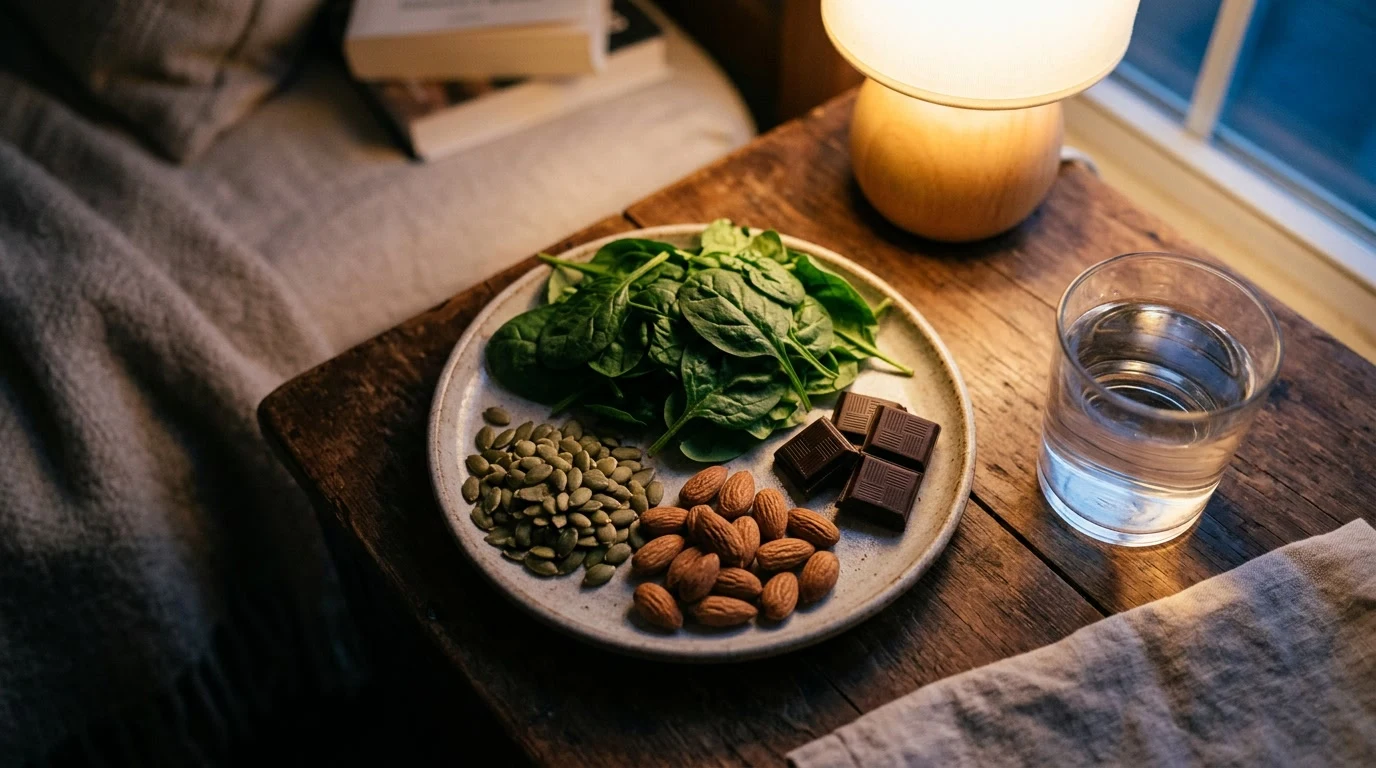
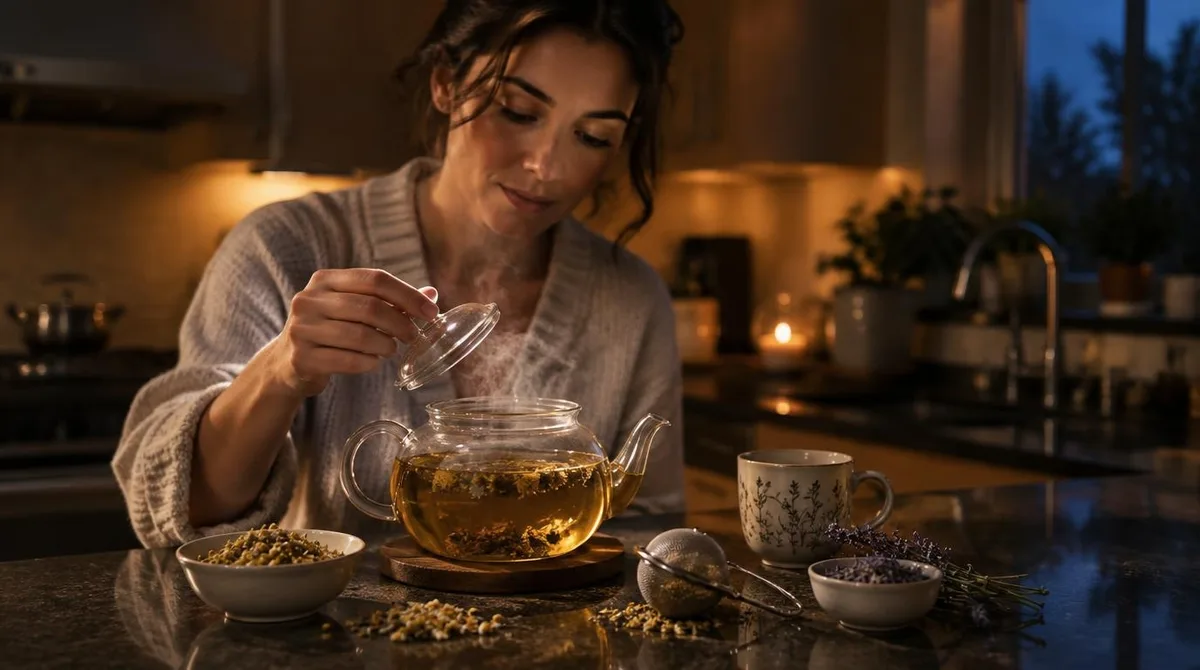
Stress relief tea starts with a simple idea. Take a caffeine-free cup. Brew it to help the body unwind. Chamomile, lavender, and passionflower lead the shelf. The evidence is early but not empty. Federal reviewers at NCCIH see real signs of promise. NCCIH is the national center for complementary medicine research. Chamomile carries early research on anxiety. Passionflower may ease worry and add sleep time. Lavender may help in some forms. No brew here is a sedative or a drug. The warm cup does much of the calming itself. Sip it slowly.
A warm cup works on two levels. The liquid itself is soothing. The pause also creates a break in a busy evening. On top of the ritual, the plants add gentle compounds of their own. Each flower carries its own research file. Knowing which is which makes the tea aisle much easier to read.
How stress relief tea is meant to work
Calming plants are not fast-acting drugs. Chamomile, lavender, and passionflower have each faced small trials. The trials cover anxiety or sleep. NCCIH calls much of the evidence preliminary. Stronger work is needed before strong claims are fair. The brewing ritual matters too. A fixed evening hour helps. So does a covered steep and an unhurried pace. The ritual signals rest almost as well as any plant compound.
Chamomile: the most studied bedtime cup
Chamomile holds the deepest research file. NCCIH reports early studies of chamomile products for generalized anxiety disorder. Those products showed promise there. The evidence for insomnia itself stays thin. One review found no sleep benefit in the single insomnia study it covered. Cautions matter here. People allergic to ragweed can react. Reactions are sometimes bad. Chamomile can also mix poorly with blood thinners such as warfarin. It can mix with sedatives and other drugs too. A nightly cup remains a gentle habit. A clinician can flag any clash in minutes.
Lavender and passionflower: florals with caveats
Lavender has real but limited science. Oral lavender oil might ease anxiety. That includes anxiety mixed with low mood. The studies tend to be small. NCCIH calls for stronger work. Lavender tea shares the scent. It lacks the studied dose of the capsules. Passionflower brings early support of its own. NCCIH reports it might reduce anxiety symptoms. It might also add total sleep time in adults with insomnia. The tea rates as possibly safe for up to seven nights of use. Passionflower stays off the list during pregnancy. Use also pauses in the two weeks before surgery. Readers following this should also see A Self Care Routine That Fits Real Life: Small and Honest.
Green tea: calm alertness with a caffeine catch
Green tea earns a special note. It works in the opposite direction from bedtime blends. Its leaves carry caffeine. Caffeine supports alertness rather than rest. NCCIH reports no safety concerns when adults drink it as a beverage. Many drinkers feel a steadier lift than coffee gives. Caffeine-free blends fit an evening ritual better. Green tea belongs to the morning shift.
Brewing basics and safety smarts
Good brewing follows the package. Cut and strength differ by brand. Most brands call for hot water. Most call for a covered steep of several minutes. A lid keeps the aromatic oils inside the cup. A stress relief tea ritual is only as strong as its consistency. The same hour each evening beats random cups by a mile. Safety rules stay short. Skip passionflower in pregnancy. Approach chamomile with care around ragweed allergies. Anyone on prescription drugs should ask a clinician about herbal mixing. Do that before any blend becomes a nightly habit. This connects to our earlier piece, Ritual Stress Relief: How Repeated Small Acts Steady the Mind.
Conclusion: a cup, not a cure
Stress relief tea works best as a calming ritual with plant support. Chamomile leads the evidence on anxiety. Passionflower shows early support for total sleep time. Lavender needs more study. Green tea belongs to mornings. Brew at a fixed hour. Sip slowly. A good cup gives the body a reliable stopping point. Anxiety that disrupts daily life needs the next step. That step is a clinician talk. The teapot stays a companion, not a treatment.